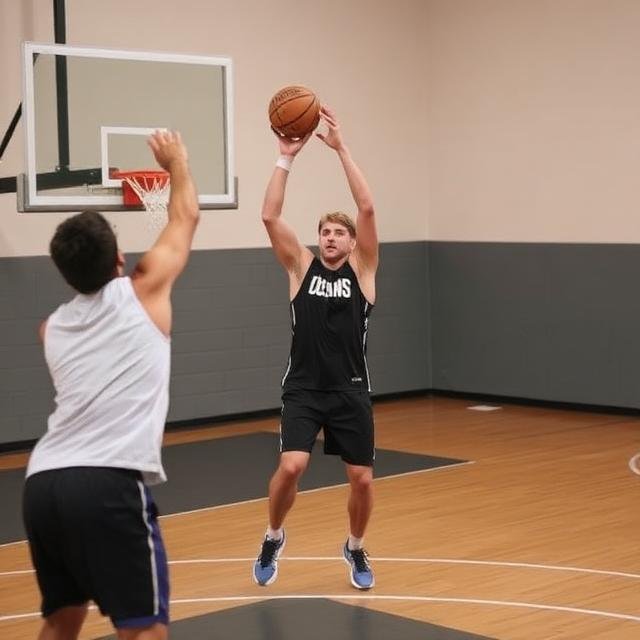
Basketball is one of the most exciting and dynamic sports in the world. It improves fitness, coordination, speed, focus, and teamwork. The best part is that you don’t always need a full court or professional setup to start learning. With the right approach, you can practice and improve your skills at home, even as a complete beginner.
This blog explains the best basketball drills for beginners at home, along with structured training methods, answers to common questions, and simple techniques to build confidence and skill step by step.
Why Basketball is Great for Beginners
Before starting drills, it’s important to understand why basketball is a great sport for beginners:
- Improves physical fitness and stamina
- Enhances coordination and balance
- Builds discipline and focus
- Develops teamwork and decision-making skills
- Can be practiced alone or with friends
Even basic home practice can significantly improve your game over time.
What are the best drills for beginners basketball?
If you are wondering what are the best drills for beginners basketball, here are the most effective home-friendly drills that build strong fundamentals:
1. Dribbling Practice (Stationary Dribble Drill)
Dribbling is the foundation of basketball.
How to do it:
- Stand in one place with a basketball
- Dribble using your dominant hand for 30–60 seconds
- Switch to your non-dominant hand
- Then alternate hands
Variations:
- Low dribble (close to the ground)
- High dribble (waist level)
- Crossover dribble
Benefits:
- Improves ball control
- Builds hand-eye coordination
- Increases confidence with the ball
2. Figure 8 Dribbling Drill
This drill improves coordination and ball handling.
How to do it:
- Spread legs slightly
- Move the ball in a figure-8 motion around your legs
- Use both hands alternately
Benefits:
- Enhances agility
- Improves coordination between hands
- Builds control in tight spaces
3. Wall Passing Drill
If you don’t have a partner, a wall is your best training tool.
How to do it:
- Stand a few feet away from a wall
- Pass the ball against it using both hands
- Catch it and repeat
Variations:
- Chest pass
- Bounce pass
- One-hand pass
Benefits:
- Improves passing accuracy
- Enhances reaction speed
- Builds upper body coordination
4. Shooting Form Practice (Without Hoop)
Even without a basket, you can practice shooting form.
How to do it:
- Stand in shooting position
- Practice proper hand placement
- Simulate shooting motion
- Focus on follow-through
Benefits:
- Builds muscle memory
- Improves shooting technique
- Increases confidence
5. Footwork Drill (Pivot Practice)
Footwork is essential for balance and movement.
How to do it:
- Hold the ball
- Practice pivoting on one foot
- Change direction while staying balanced
Benefits:
- Improves stability
- Enhances game movement
- Helps avoid turnovers
6. Agility Drill (Cone or Object Drill)
You can use bottles or household items as cones.
How to do it:
- Place objects in a line or zigzag pattern
- Dribble through them quickly
- Focus on control and speed
Benefits:
- Improves speed and agility
- Enhances dribbling under pressure
How to teach basketball to beginners at home?
If you are asking how to teach basketball to beginners at home, the key is to start simple and build gradually.
1. Start with Basic Rules
Explain:
- How to dribble
- How to pass
- How scoring works
Keep it simple and easy to understand.
2. Focus on One Skill at a Time
Don’t overwhelm beginners.
Example order:
- Dribbling
- Passing
- Shooting form
- Footwork
3. Use Short Practice Sessions
Beginners learn better in short sessions.
- 15–30 minutes daily
- Avoid long tiring sessions
4. Encourage and Motivate
Positive reinforcement builds confidence.
- Appreciate small improvements
- Avoid criticism in early stages
5. Use Simple Home Setup
You don’t need a professional court.
You can use:
- A wall for passing
- Open space for dribbling
- Chairs or bottles as obstacles
6. Make Practice Fun
Turn drills into games:
- Time challenges
- Dribble races
- Accuracy challenges
Fun keeps beginners consistent.
How should a beginner train basketball?
If you are wondering how should a beginner train basketball, the answer is consistency, structure, and patience.
1. Follow a Daily Routine
Example:
- Warm-up (5 minutes)
- Dribbling (10 minutes)
- Passing (10 minutes)
- Footwork (5–10 minutes)
- Cool down (5 minutes)
2. Always Warm Up
Warm-up prevents injuries.
Do:
- Jumping jacks
- Light stretching
- Arm rotations
3. Focus on Fundamentals First
Beginners should not rush advanced skills.
Priorities:
- Ball control
- Balance
- Coordination
4. Track Progress
Keep a simple record:
- How long you practiced
- What drills improved
This builds motivation.
5. Stay Consistent, Not Perfect
Improvement comes with repetition, not perfection.
Even 20 minutes daily is enough if done consistently.
Is basketball good for high blood pressure?
If you are asking is basketball good for high blood pressure, the answer is generally yes—when played moderately and safely.
Benefits of basketball for blood pressure:
- Improves heart health
- Enhances blood circulation
- Helps maintain healthy weight
- Reduces stress levels
Physical activity like basketball supports cardiovascular health, which is important for managing blood pressure.
Important precautions:
- Avoid overexertion
- Warm up properly
- Stay hydrated
- Take breaks when needed
- Consult a doctor if you have severe hypertension
Key takeaway:
Moderate basketball practice can support heart health, but it should be balanced and not overly intense for individuals with high blood pressure.
Additional Tips for Beginners Practicing Basketball at Home
Here are extra tips to improve faster:
Practice with Both Hands
Develop ambidextrous control for better gameplay.
Stay Focused
Avoid distractions during practice sessions.
Improve Balance
Strong balance improves all basketball skills.
Watch and Learn
Watch beginner tutorials or professional matches.
Build Fitness
Basic strength and stamina training helps performance.
Final Thoughts
Basketball is not just a sport—it’s a complete physical and mental workout. Beginners can easily start at home using simple drills and consistent practice.
To summarize:
- Start with basic dribbling, passing, and footwork drills
- Practice daily for short sessions
- Focus on fundamentals before advanced skills
- Keep training simple, fun, and consistent
- Basketball can also support heart health when played safely
With patience and regular practice, even home training can turn a beginner into a confident basketball player.