Ganesh Steel Potato Masher: The ₹116 Tool That Makes Pav Bhaji Night Easier
Heads up: Some links on this site are affiliate links. If you buy through them we may earn a commission, at no extra cost to you. Prices change often — always check the retailer before you buy.
Price checked on Amazon.in on 14 November 2026. Prices change often, so check the current price before you buy.
Every home has its own pav bhaji hack. Some use the bottom of a steel glass, some use a katori, some use the round end of a belan. They all work, sort of, and they all leave you with a sore wrist and bhaji splattered on the tiles.
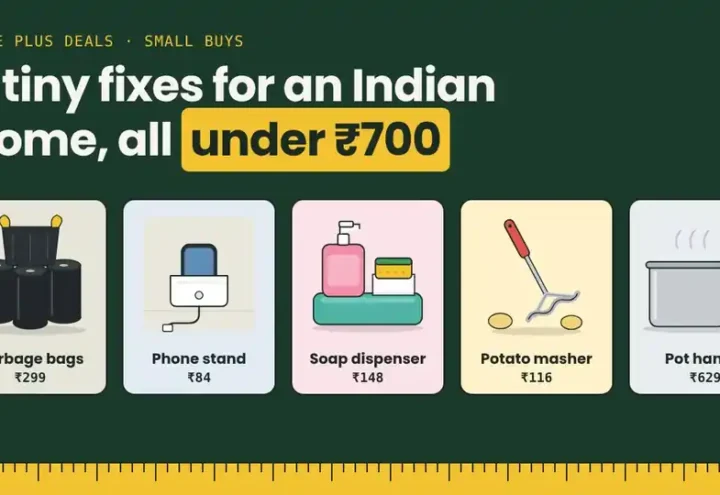
A proper masher costs about as much as a plate of pav bhaji at a street stall. We included this one briefly in our small home buys under ₹700 list; here’s a closer look at what it’s good for.

Ganesh Stainless Steel Potato Masher
- Good for
- Pav bhaji, aloo paratha and samosa filling, and mashing tomatoes into gravy right in the pan
- Skip if
- You cook mostly in non-stick pans, because steel can scratch the coating
Rated 4.1 out of 5 by more than 4,200 buyers, with 3,000+ bought in the past month.
What it is
A simple stainless steel masher with a heat-proof handle. It weighs about 90 grams, so it’s light enough to hang on a hook near the stove. Colour of the handle is “assorted”, so you get whatever comes. There’s nothing to assemble and nothing to break.
Seven everyday uses beyond pav bhaji
- Pav bhaji: the obvious one. Mash the boiled vegetables directly in the kadhai with the butter and masala.
- Aloo paratha filling: lump-free potato makes the parathas far less likely to tear while rolling.
- Samosa and masala dosa aloo: for a chunkier texture, just press fewer times.
- Tomato gravy: mash tomatoes while they cook down instead of blending them separately. One less jar to wash.
- Baingan bharta: mash the roasted brinjal right in the pan.
- Thickening dal or rajma: a few presses break some of the beans and make the gravy creamier without adding cream.
- Banana or avocado: quick mash for a kid’s snack or toast.
When to skip it
- Non-stick cookware: steel will scratch the coating. Either mash in a steel or iron kadhai, or buy a nylon/silicone masher instead.
- Very smooth purée: for baby food or a silky soup, a hand blender does a better job.
- Large quantities: for cooking for 20 people at a function, a heavier, wider masher is less tiring.
Is ₹116 a good price?
There’s almost no discount here: ₹116 against a ₹121 MRP. But that’s normal for basic kitchen tools, and it’s genuinely cheap for something you’ll use for years. Don’t wait for a “sale” on this one. If you’re comparing it against a set of mashers or a combo pack, the unit price calculator will tell you whether the combo is actually cheaper per piece.
Care tips
- Rinse it right after use. Dried potato starch in the grid holes is annoying to remove later.
- If it does dry, soak for 10 minutes in hot water and use an old toothbrush on the holes.
- Dry it before hanging it up, so water doesn’t sit where the handle meets the steel.
- Wearing gloves for the dishes? Our post on silicone dish washing gloves covers what they do and don’t handle well.
Verdict
It’s a boring tool in the best way: cheap, sturdy and used several times a week in most Indian kitchens. If you cook in steel or iron, just buy it. If your kitchen is mostly non-stick, get a nylon masher instead.
Building out a budget kitchen? Add a budget knife set with sharpener, and keep the stove area clean with our chimney filter cleaning guide.